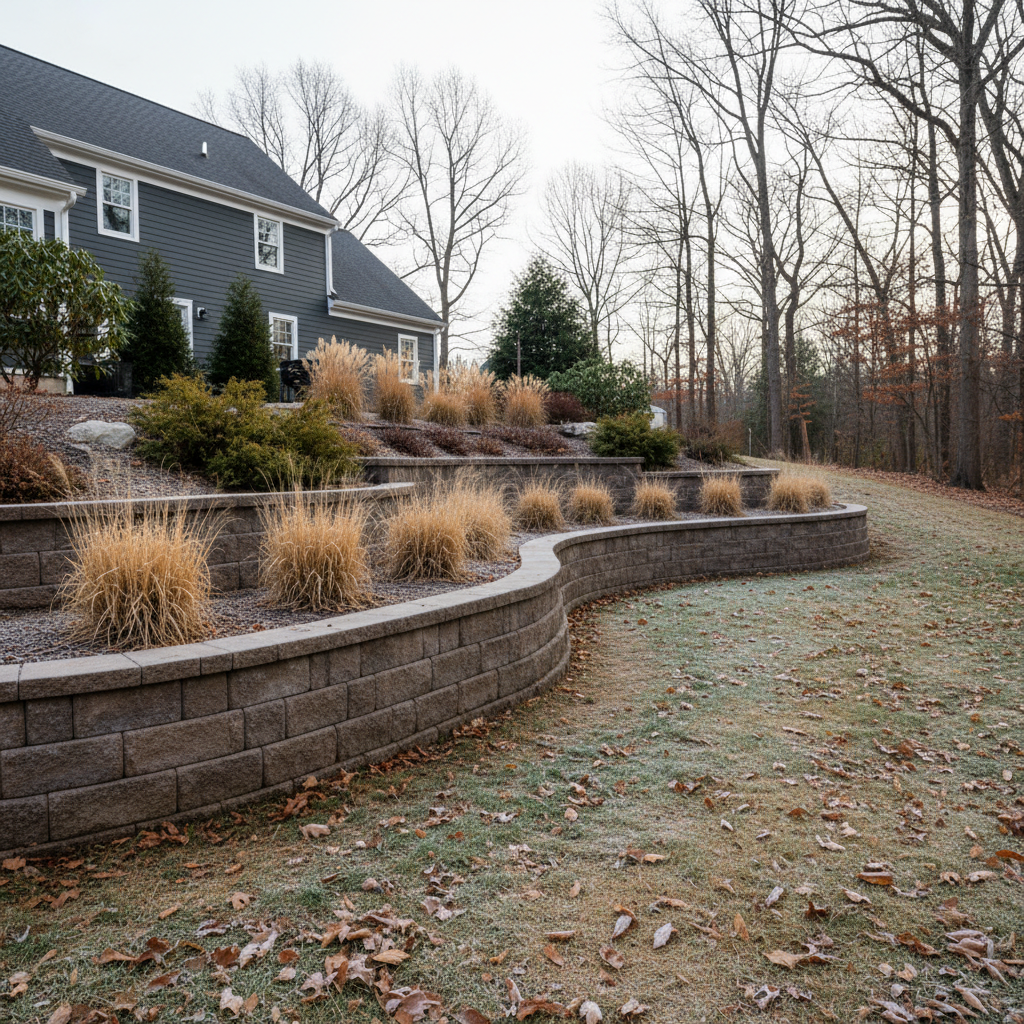
So, you've got a concrete retaining wall already, or maybe you're thinking about putting one in? Good call. These things are incredibly strong, they look sharp, and they do a super important job holding back earth—especially on those sloped properties we see so much of around here, like up near Lake Williams.
But let's be honest, New England weather isn't exactly easy on anything. Our seasons throw everything at concrete, from brutal freezing winters to sticky, humid summers. So, how do you make sure your retaining wall really lasts? It boils down to smart timing when you build it and a little attention all year long.
When's the Best Time to Build or Repair a Retaining Wall?
This is probably the question I get asked most often. For concrete work, timing is absolutely everything. You can't just pour concrete whenever the mood strikes and expect it to cure right.
- Spring (Late April to June): This is prime time, no doubt about it. The ground has finally thawed out, and we're usually past the worst of those hard freezes. Temperatures are consistently above freezing, which is super important for concrete to cure correctly and get to its full strength. The ground is often moist but not waterlogged, which makes digging a lot easier. Plus, you'll dodge the intense heat of summer and the quick temperature drops we get in the fall.
- Summer (July to Early September): Still a decent window, but you really have to watch out for the heat. Hot, dry weather can make concrete dry out way too fast, and that often leads to cracking. We'll frequently take extra steps like misting it or using special curing compounds to slow down that hydration process. It's totally doable, but it definitely needs more vigilance from our crew.
- Fall (Mid-September to Mid-November): This can be a pretty good time, but honestly, it feels like a race against the clock. You need enough warm days for the concrete to cure before those sustained freezing temperatures finally hit. If it freezes too soon, the water inside the concrete can expand, causing real damage. We're always glued to the forecast if we're pouring late in the fall.
- Winter (December to March): For new pours? Forget about it. Seriously. Unless it's an absolute emergency and we're talking about extensive heating and protection, pouring concrete in freezing temperatures is just asking for trouble. Repairs might be possible for small, non-structural issues, but major work? No way. The risk of freeze-thaw damage is just too high to mess with.
So, if you're planning a new wall or a big repair, shoot for spring or early summer. You'll get the best results, and frankly, it makes our job at Top Line Concrete Marlborough a lot smoother too.
Weather Conditions That Affect the Work
It's not just the season; it's what's happening day-to-day. Here's what we're always keeping a close eye on:
- Temperature: Like I said, consistent temperatures above 40°F (4°C) are perfect for pouring and curing. Too cold, and it just won't cure properly. Too hot, and it dries out way too fast.
- Moisture: Concrete needs water to hydrate and get strong, but too much external water—like heavy rain during the pour or right after—can weaken the mix or even wash away cement. On the flip side, too little moisture (think hot, dry, windy days) can lead to rapid evaporation and cracking.
- Wind: Strong winds can speed up surface drying, which, again, can cause cracking. We might put up windbreaks or apply curing compounds to help with this.
- Frost: This is the big one for us here in New England. Frozen ground can shift, and if you pour concrete on top of it, you're just setting yourself up for movement and cracking down the road. We always make sure the ground is completely thawed and stable before we even think about digging.
Protecting Your Retaining Wall Year-Round
Once your wall is in place, your job isn't quite finished. A little maintenance really goes a long way to protect your investment.
- Drainage is Key: This is probably the single most important thing you can do. Retaining walls are built to hold back earth, but they also need to handle water. Most well-built walls will have some kind of drainage system (like a French drain or weep holes) behind them. Make sure these don't get blocked by soil, leaves, or other debris. If water builds up behind the wall and can't get out, the hydrostatic pressure can become immense, potentially pushing the wall out or causing cracks.
- Inspect for Cracks: Do a quick visual check a couple of times a year, especially after winter. Small hairline cracks are often just surface shrinkage and usually aren't a big deal. But if you spot wider cracks (say, 1/8 inch or more), cracks that are growing, or cracks that run horizontally or diagonally across multiple blocks, that's a definite red flag. Give us a call if you're worried, okay?
- Keep it Clean: Get rid of any dirt, moss, or mildew buildup. A simple power wash (on a low setting, and not too close) can keep it looking good and stop organic growth from holding moisture against the concrete.
- Avoid Heavy Loads: Don't pile heavy materials or equipment directly on top of or too close to the wall unless it was specifically engineered for that kind of weight. Remember, it's holding back earth; it's not necessarily designed to support additional heavy stuff.
- Mind Your Landscaping: While plants can look nice around a wall, be careful with large trees or shrubs whose roots could grow into or under the wall, causing damage over time.
- Seal it (Optional but Recommended): A good quality concrete sealer applied every few years can add an extra layer of protection against moisture getting in, freeze-thaw cycles, and staining. Think of it like putting sunscreen on your wall.
Your concrete retaining wall is a tough customer, but a little seasonal awareness and care will make sure it keeps doing its job for decades. If you ever have questions or spot something that doesn't quite look right, don't hesitate to reach out. We're your neighbors here in Marlborough, and we're always happy to lend a hand.