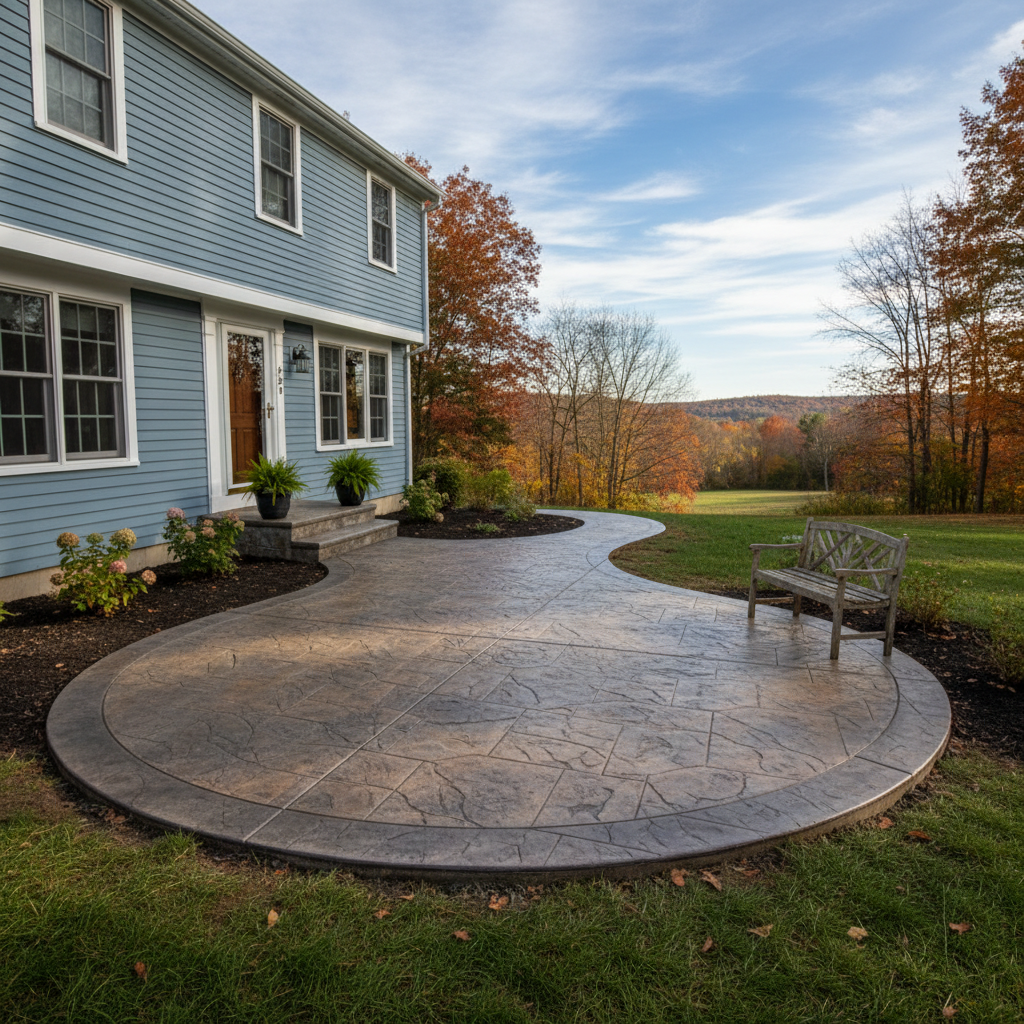
You're probably wondering what decorative concrete is going to set you back. It's a fair question, and honestly, it's not as simple as a flat rate per square foot. There are a lot of moving parts, and I want to break down what you're really paying for when you choose something beyond plain gray concrete.
What Makes Decorative Concrete Cost More?
First off, decorative concrete isn't just concrete. It's concrete with an artistic touch, and that artistry, combined with specialized materials and labor, is what bumps up the price. Here's what I see affecting the cost most:
- The Type of Decorative Finish: Stamped concrete, stained concrete, polished concrete, exposed aggregate – they all have different processes and material costs. Stamped concrete, for example, involves molds, color hardeners, and release agents, plus more labor to get that pattern just right. Staining is less labor-intensive on the application side but requires careful surface prep. Polishing is a multi-step grinding process that takes specialized equipment and time.
- Project Complexity & Size: A simple rectangular patio is one thing. A winding walkway with intricate curves, multiple patterns, or elevation changes? That's going to take more time and skill. Smaller jobs often have a higher per-square-foot cost because the fixed costs (like mobilization, setup, and minimum material orders) are spread over fewer square feet. A 100 sq ft entryway might run you $15-25/sq ft, while a 1000 sq ft driveway could be $10-18/sq ft.
- Site Preparation: This is huge. If we're tearing out an old, cracked asphalt driveway or a crumbling concrete slab, that demolition and hauling adds to the cost. If the ground needs extensive grading or compacting, especially in some of those older Marlborough neighborhoods with uneven terrain, that's more work before we even pour. Proper sub-base preparation is critical for longevity, so we don't cut corners here.
- Color & Pattern Choices: Basic colors and common patterns are usually more affordable. If you're looking for custom color blends, multiple stamp patterns, or intricate hand-scoring, that's going to increase material and labor costs.
- Accessibility: Can our trucks and equipment easily access the pour site? If we have to wheelbarrow concrete a long distance or pump it over a house, that adds significant labor and equipment rental charges.
Typical Price Ranges in Marlborough, MA
Alright, let's get to some numbers. Keep in mind these are general ranges for installed, finished projects. They can fluctuate based on all those factors I just mentioned.
- Stamped Concrete: For a quality stamped concrete job, you're generally looking at $12 to $22 per square foot. This includes the concrete, color hardener, release agent, stamping tools, and the skilled labor to make it look good. If you want multiple colors, intricate patterns, or a high-end sealer, it'll be on the higher end. For a 400 sq ft patio, that's roughly $4,800 to $8,800.
- Stained Concrete: This can vary widely depending on whether it's an existing slab or new concrete. For a new pour with an integral color and a topical stain, you might see $8 to $16 per square foot. If we're staining an existing, well-prepped concrete slab, it could be less, maybe $6 to $12 per square foot, but surface prep is key.
- Polished Concrete: This is typically for interior floors. For a basic grind and polish (no aggregate exposure), expect $7 to $15 per square foot. If you want a high-gloss finish, exposed aggregate, or custom dyes, it can jump to $15 to $25+ per square foot.
- Exposed Aggregate: This finish, where we wash away the surface paste to reveal the stone, usually falls in the $10 to $18 per square foot range. It's durable and looks great.
What Should a Quote Include?
When Top Line Concrete Marlborough gives you a quote, we make sure it's clear. Here's what you should expect from any reputable contractor:
- Detailed Scope of Work: Exactly what's being done. Is it tear-out and haul-away? Grading? What type of sub-base? Specific concrete PSI?
- Material Specifications: What type of decorative finish (e.g., Ashlar Slate stamp, Walnut stain), colors, and sealers will be used.
- Square Footage: The exact area being covered.
- Total Price: A clear, all-inclusive price, not just a per-square-foot estimate that leaves you guessing about other fees.
- Payment Schedule: Typically a deposit, progress payments, and a final payment upon completion.
- Warranty Information: What's covered and for how long.
- Timeline: An estimated start and completion date.
How to Avoid Overpaying
You don't want to get ripped off, and I get that. Here's my advice:
- Get Multiple Bids: Don't just go with the first guy. Get at least three detailed quotes. This helps you compare apples to apples.
- Ask for References & See Work: A good contractor will be proud to show off their past projects. Look at their decorative concrete work in person if possible.
- Understand the Details: Don't be afraid to ask questions about the process, materials, and timeline. If a contractor can't explain it clearly, that's a red flag.
- Don't Chase the Lowest Price: The cheapest bid often means corners are being cut somewhere – in materials, labor, or experience. Decorative concrete is an investment; you want it done right the first time.
- Check for Insurance & Licensing: Make sure they're properly insured and licensed to work in Massachusetts. You don't want liability falling on you.
Ultimately, decorative concrete adds real value and curb appeal to your property. It's a big decision, and I hope this helps you understand the costs involved so you can make an informed choice for your Marlborough home.